

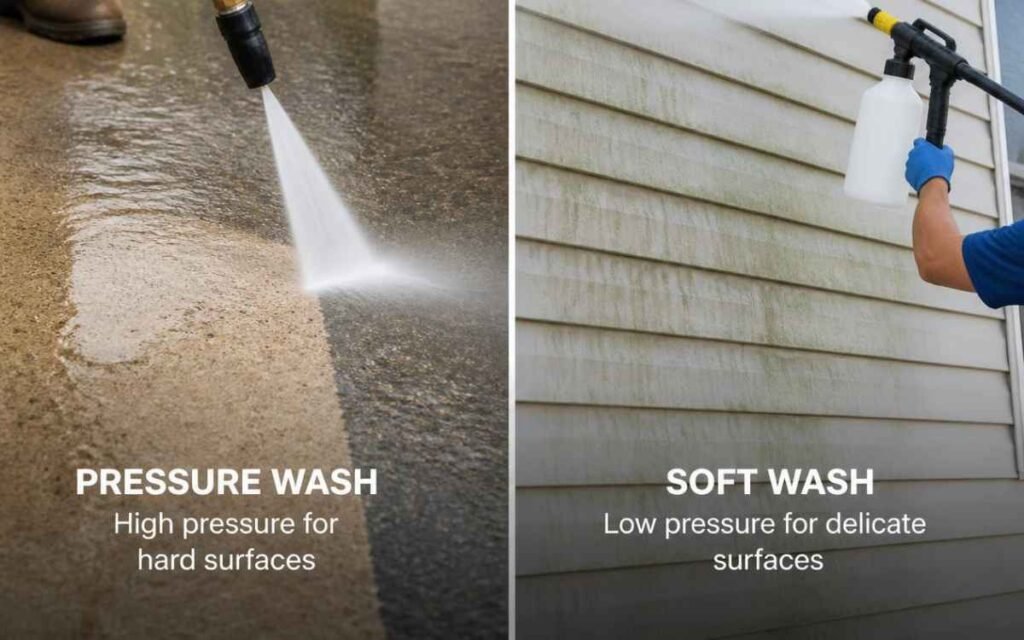
People often use “pressure washing” as a catch-all term, but the right approach depends entirely on the surface. Use too much pressure on the wrong material and you can etch, streak or strip it. Use too little on hard surfaces and the job looks half-done. Here’s how the two main methods differ, and how we choose between them.
What pressure washing is best for
Pressure washing uses a strong, focused jet of water to blast away dirt and build-up. It’s the right tool for hard, durable surfaces: concrete driveways, paths, brick paving and some patios. On these surfaces the pressure lifts ingrained grime, oil and staining that a gentle wash simply can’t shift.
What soft washing is best for
Soft washing uses low pressure combined with the correct cleaning solution to break down algae, mould and grime, then rinses it away gently. It’s the safe choice for anything that high pressure could damage: render, painted walls, roof tiles, fencing and delicate surfaces. The solution does the work, not brute force, so the surface is protected.
Why using the wrong one causes damage
High pressure aimed at render or paint can gouge the surface, force water behind it, or leave permanent streaks. On roof tiles it can crack or dislodge them and strip protective coatings. This is the single most common cause of DIY cleaning going wrong, and it’s exactly what the soft-wash method avoids.
How we decide on the day
Before we start, we look at the surface, its condition and what’s causing the staining. Hard, solid surfaces usually get pressure washing; anything delicate or coated gets soft washing; and many jobs use a mix of both across different areas. Matching the method to the surface is what gives an even finish without any damage.
The bottom line
You don’t need to work out which method your property needs — that’s our job. When we quote, we’ll tell you exactly how each surface will be cleaned and why. If you’re not sure what your place needs, get in touch for a free, no-obligation quote and we’ll talk it through.